

guides - expert witnesses
If you’ve been let down by a professional, you probably already know something went wrong. What’s harder to understand is how you would ever prove it — especially when the person who harmed you is a qualified expert in their own field. This is one of the most common concerns people raise when they first contact us, and it’s a completely reasonable one.
The answer, in most cases, is an expert witness. Expert witnesses are independent specialists engaged to give a formal opinion on whether a professional met the standard of care required of them. In professional negligence claims, they are often the difference between a case that succeeds and one that doesn’t get off the ground.
The good news is that sourcing, instructing, and managing expert witnesses is something specialist professional negligence lawyers handle entirely on your behalf — you don’t need to know any of this to make a claim. But understanding how the process works can go a long way toward easing the uncertainty.
✔ No Win No Fee ✔ Free Evaluation ✔ Confidential ✔ Australia-Wide
An expert witness is an independent specialist engaged to provide opinion evidence on a matter that falls outside the knowledge of an ordinary person — including a judge. Unlike a lay witness, who gives evidence about facts they personally observed, an expert witness gives evidence about what those facts mean — and whether the professional’s conduct measured up.
Under section 79 of the Evidence Act 1995 (Cth), expert opinion evidence is admissible when the person has specialised knowledge based on training, study, or experience, and their opinion is wholly or substantially based on that knowledge. This is the legal foundation that allows courts to receive and rely on expert evidence in professional negligence proceedings.
In practice, the expert engaged in your case will typically be a practising or recently retired professional in the same field as the person you’re claiming against — a cardiologist reviewing a cardiologist’s conduct, or a solicitor assessing whether another solicitor’s advice was competent.

Courts are not in a position to independently assess whether a surgeon’s intraoperative decision was below the accepted standard, whether a financial adviser’s strategy was unsuitable for a conservative investor, or whether an engineer’s calculations were deficient. These are matters that require specialist knowledge — and that knowledge has to be put before the court through formal evidence.
The High Court’s decision in Rogers v Whitaker (1992) 175 CLR 479 is foundational here. The Court made clear that the standard of care in professional negligence is not simply what the profession considers acceptable practice — it is what a reasonable professional in that position ought to have done, assessed objectively. Expert evidence is the mechanism by which that standard is identified, articulated, and tested.
Without it, the breach element of a professional negligence claim — the requirement to show the professional’s conduct fell below the standard expected — is extraordinarily difficult to establish at trial. In most cases, it cannot be done.
It’s also worth understanding that expert evidence must be genuinely independent. An expert who is seen to be advocating for the party that engaged them risks having their evidence given little or no weight by the court. Credibility matters, and experienced professional negligence lawyers know which experts carry that credibility.
Expert witnesses come from across every field where professional negligence claims arise. The expert engaged in your matter will be matched to the specific profession and conduct being assessed.
If your situation doesn’t fit neatly into one of these categories, that’s not unusual. Specialist professional negligence lawyers work across the full range of licensed and regulated professions, and the right expert for your matter can be identified through the case evaluation process.
This is where most people’s uncertainty sits — not whether experts exist, but what they actually do, and what the process looks like in practice.
The expert is provided with the relevant materials from your case — clinical records, contracts, correspondence, financial statements, technical drawings, valuation reports, or whatever documentation is central to the dispute. They review those materials independently and form their own professional opinion based on what they find.
They are not told what conclusion to reach. Their role is to give an honest assessment of the conduct, measured against the standard expected of a competent professional in that field.
The expert produces a formal written report. It sets out their qualifications, the materials they reviewed, the assumptions they made, the opinion they reached, and the reasoning behind it.
In Australian courts, expert reports must comply with the applicable expert witness code of conduct. In New South Wales, that is Schedule 7 of the Uniform Civil Procedure Rules 2005 (NSW). Victoria uses Order 44 of the Supreme Court (General Civil Procedure) Rules 2015. Queensland adopts Schedule 1 of the Uniform Civil Procedure Rules 1999 (QLD). In federal proceedings, Schedule 4 of the Federal Court Rules 2011 (Cth) applies.
Each of these codes requires the expert to acknowledge, in writing, that their primary duty is to the court — not to the party who engaged them. This isn’t a formality. Courts take it seriously, and so do experienced litigators.
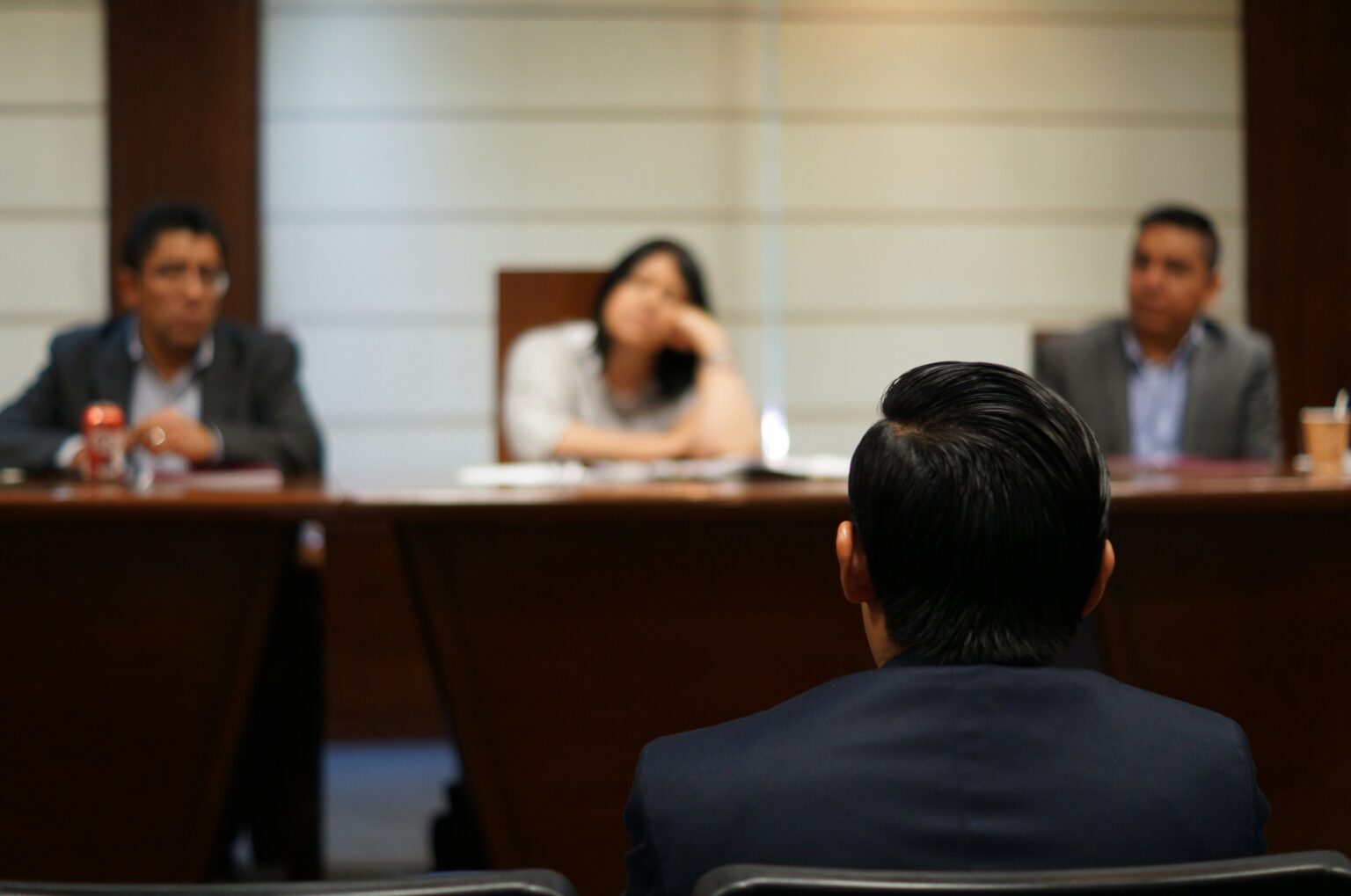
If your matter proceeds to a hearing or trial, the expert may be required to attend and give oral evidence. They can be cross-examined on their report by the opposing side’s lawyers. In some courts — particularly the Supreme Courts and the Federal Court — concurrent expert evidence, known as “hot-tubbing,” is used. Under this process, the experts from each side give evidence at the same time, responding to questions from the judge directly. It can be a more efficient and illuminating process than sequential cross-examination, and judges often find it useful for identifying where the experts actually agree and where they genuinely diverge.
Every Australian jurisdiction has formal rules governing how expert witnesses must conduct themselves. These are not guidelines — they are procedural obligations that courts enforce.
The codes require that an expert witness:
A failure to comply with these obligations is serious. Courts can give reduced weight to a non-compliant report, exclude it from evidence entirely, or make adverse costs orders. This is precisely why the selection and instruction of expert witnesses is not something to leave to chance — it requires lawyers who understand both the substantive standards and the procedural rules.
You do not need to find an expert yourself. You do not need to approach anyone in your professional’s field, commission a report, or navigate the procedural requirements of any court’s expert witness rules. That is work for your legal team — and it’s work that experienced professional negligence lawyers do routinely.
The legal team connected through Fair Go Australia knows which experts carry weight in particular jurisdictions, which professionals have given credible evidence in similar cases, and how to instruct an expert so that their report withstands cross-examination. That knowledge is not incidental — it directly affects the strength of your case.
Under a no-win, no-fee arrangement, disbursements — including expert fees, which can be substantial in complex claims — are typically advanced by the firm. You are not required to fund the expert evidence yourself while your case is on foot.
If the other side produces an expert report, your legal team will review it critically. Where the opposing expert’s opinion is contestable — and often it is — a responding expert may be engaged. The quality of that response can be decisive.
The complexity of expert evidence is not your burden. It is something your lawyers manage on your behalf, from selection through to cross-examination.
Professional negligence claims in Australia are subject to strict limitation periods — generally three years from the date you became aware, or should reasonably have become aware, of the negligence. This varies by state. Missing this deadline can permanently extinguish your right to claim. If you are unsure whether your limitation period is still open, contact our team for a free assessment as soon as possible.
The need for expert evidence — and the type of expert required — depends entirely on the nature of your claim and the professional involved. Our legal team will assess your situation and explain exactly what would be needed to build your case. There is no obligation, no upfront cost, and everything you share is confidential.
We respond within 1 business day · No obligation · Completely confidential
Common questions
In most cases, yes. Professional negligence claims require you to establish that the professional’s conduct fell below the standard expected of a competent person in their field. Courts cannot assess that without expert evidence. There are limited exceptions — for example, where the negligence is self-evident — but these are rare. Your legal team will advise whether expert evidence is required in your specific situation.
Under a no-win, no-fee arrangement, expert fees are typically treated as a disbursement and advanced by the firm during the course of the litigation. You are not generally required to fund expert evidence yourself while the claim is on foot. The specific arrangement should be confirmed with your lawyer at the outset.
You can express a preference, but the selection of an expert is ultimately a matter for your legal team. Experienced professional negligence lawyers will recommend experts who have relevant qualifications, credible standing in their field, and a track record of giving reliable evidence in court. An expert who is perceived as too close to the instructing party — or who has given unreliable evidence in previous proceedings — can do more harm than good.
Expert witness codes of conduct in all Australian jurisdictions require that any change in opinion be disclosed promptly — to the instructing party and, where proceedings are on foot, to the court. This is a procedural obligation, not a matter of discretion. A change in opinion does not necessarily end a claim, but it is something your legal team will need to manage carefully, which may include seeking a second expert opinion.
Hot-tubbing — formally known as concurrent expert evidence — is a procedure used in some Australian courts where the expert witnesses from each side give evidence at the same time, rather than sequentially. The judge asks questions directly, and the experts respond and engage with each other’s opinions. It is increasingly used in complex professional negligence matters in the Supreme Courts and Federal Court. Its effect on your claim depends on how well your expert performs under that process — another reason the selection of the right expert matters.
This varies significantly depending on the expert’s availability, the volume of material they need to review, and the complexity of the claim. In straightforward matters, a report may be produced within six to eight weeks of instruction. In complex cases — particularly in medical or engineering negligence — it can take considerably longer. Your legal team will factor this into the overall case timeline and ensure the report is obtained well in advance of any court deadlines.
Our goal is to help people in the best way possible. this is a basic principle in every case and cause for success. contact us today for a free consultation.
Sign up to our newsletter